Introduction
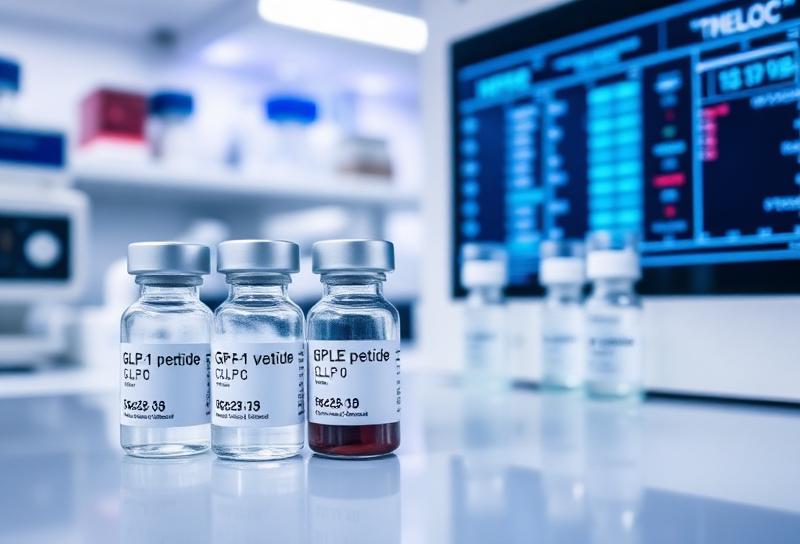
GLP-1 receptor agonist peptides have become the most in-demand compounds in the research peptide market. Whether you're a researcher studying metabolic pathways, a peptide supplier verifying your inventory, or an individual who purchased peptides online, GLP-1 peptide testing ensures you know exactly what you have.
At ACS Peptide Testing Labs, GLP-1 peptides now account for over 40% of all samples we receive. This guide covers what testing involves, why it matters, and how to get started.
What Are GLP-1 Peptides?
GLP-1 (glucagon-like peptide-1) receptor agonists mimic the incretin hormone GLP-1 to regulate blood sugar, slow gastric emptying, and reduce appetite. The three most commonly tested GLP-1 peptides are:
Semaglutide
Semaglutide is a GLP-1 receptor agonist with a C18 fatty diacid modification that extends its half-life to approximately one week. It's the active ingredient in branded products and is widely available as a research peptide.
Key testing considerations:
- Molecular weight confirmation at ~4,113.58 Da
- Verification of the Aib substitution at position 8
- C18 fatty diacid linkage integrity at Lys26
- We've detected counterfeit or mislabeled Semaglutide in ~10% of samples
Tirzepatide
Tirzepatide is a dual GIP/GLP-1 receptor agonist with a C20 fatty diacid modification. Its dual mechanism makes it unique among incretin peptides.
Key testing considerations:
- Molecular weight of ~4,813.45 Da
- Incomplete lipidation is the most common quality issue
- Deamidation products can develop with improper storage
- TFA salt content significantly affects actual peptide quantity
Retatrutide
Retatrutide is a triple agonist targeting GIP, GLP-1, AND glucagon receptors. It showed the most dramatic weight loss results in clinical trials.
Key testing considerations:
- Complex 39-amino acid sequence with C20 fatty diacid
- Highest synthesis complexity = highest risk of quality issues
- Molecular weight ~4,757 Da must be confirmed by LC-MS
- Aggregation is more common due to the peptide's length
What Tests Do GLP-1 Peptides Need?
HPLC Purity Analysis
HPLC purity testing separates the target peptide from impurities. For GLP-1 peptides:
- Minimum acceptable purity: 95% for research, 98%+ for in vivo work
- Special columns required: Lipidated peptides like Semaglutide need wide-pore C4 or C8 columns rather than standard C18
- Common impurities: Deletion sequences, truncated peptides, deamidation products, and incomplete lipidation variants
Mass Spectrometry Identity Confirmation
Mass spectrometry is essential for GLP-1 peptides because:
- It confirms you have the correct molecule (not a substituted cheaper peptide)
- Detects the fatty acid modification that's critical for biological activity
- Identifies the position of any sequence errors
- ESI-MS and LC-MS/MS are the preferred techniques
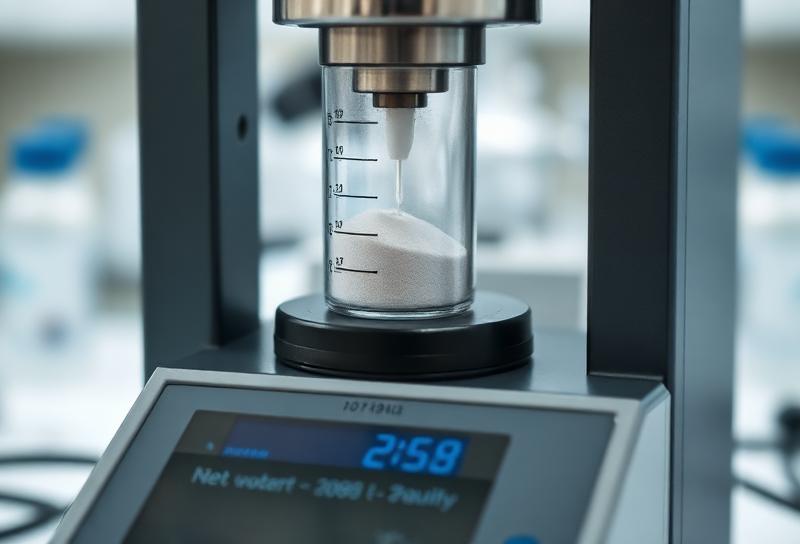
Net Peptide Content Testing
GLP-1 peptides are expensive. Knowing the actual amount of active peptide in your vial matters:
- Labeled weight includes counter-ions (TFA salts), moisture, and residual solvents
- Actual peptide content can be 50-80% of labeled weight
- Gravimetric analysis combined with amino acid analysis determines true content
- Learn more about net content testing
Contaminant Screening
For research applications, screen for:
- Heavy metals (Pb, Hg, As, Cd) via ICP-MS
- Residual solvents (TFA, DMF, acetonitrile) via headspace GC
- Microbial contamination for injectable formulations