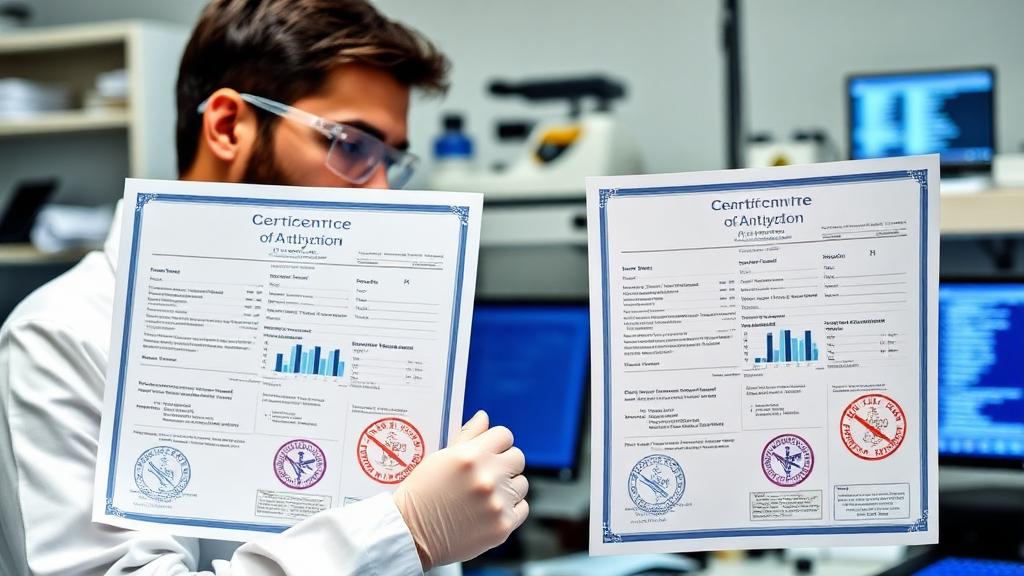
Why Independent Peptide Testing Is Essential
Independent peptide testing removes the inherent conflict of interest that exists when a supplier tests their own products. As the peptide market grows, so does the need for third party testing for peptides from unbiased, accredited laboratories.
Whether you're a researcher relying on peptide purity for critical experiments or a compounding pharmacy ensuring product quality, independent peptide testing provides the objective data you need.
The Problem with Supplier-Only Testing
Conflict of Interest
When a peptide manufacturer provides their own Certificate of Analysis, there's a built-in incentive to report favorable results. This doesn't mean every supplier is dishonest, but it means you can't fully peptide verify quality without independent confirmation.
Common Discrepancies We Find
At ACS Peptide Testing Labs, approximately 15-20% of supplier COAs we independently verify show discrepancies:
- Overstated purity: Supplier claims 98% but actual purity is 90-94%
- Wrong identity: Peptide doesn't match the claimed sequence (2-5% of cases)
- Degradation products: Signs of improper storage or old stock not reflected in COA
- Inaccurate concentration: Labeled peptide content doesn't match actual measurement
Impact on Research
Using untested or poorly characterized peptides can lead to:
- Irreproducible experimental results
- Wasted research time and funding
- Incorrect scientific conclusions
- Failed clinical trials or regulatory submissions
How Third-Party Peptide Testing Works
What Is Third-Party Verification?
Third party peptide testing means having your peptide analyzed by a laboratory that has no business relationship with the supplier. The testing is performed blind, without reference to supplier claims, to ensure completely unbiased results.
The Process
- Submit your sample: Send a portion of your peptide along with the supplier's COA
- Blinded analysis: Our lab performs testing without referencing supplier claims
- Independent results: We generate our own Certificate of Analysis
- Comparison report: We compare our findings to the supplier's claims with a pass/fail assessment
- Expert consultation: Our scientists discuss findings and provide recommendations
What We Test
Our independent peptide testing panel includes:
- Identity (LC-MS): Molecular weight confirmation to verify you received the correct peptide
- Purity (HPLC): Quantitative determination of peptide purity and impurity profiling
- Content: Net peptide content corrected for moisture and counter-ions
- Contaminants: Heavy metals, residual solvents, and microbial testing as needed
When Should You Use Independent Testing?
Always Test These Scenarios
- New supplier qualification: Before committing to a new peptide vendor
- High-value research: When experimental outcomes depend on peptide quality
- Clinical or in vivo studies: Patient safety demands verified quality
- Large orders: Verify a small sample before accepting a bulk shipment
- Regulatory submissions: FDA and ICH require independent characterization data
Risk-Based Approach
Not every peptide purchase requires independent testing. Consider the risk:
- High risk: Novel peptides, modified sequences, clinical applications → Always test independently
- Medium risk: Routine research peptides from established suppliers → Test periodically (every 3-6 months)
- Lower risk: Well-characterized peptides from extensively qualified suppliers → Test annually or when issues arise