Skip to main contentSkip to main content
Back to Blog
Stability Studies

Peptide Stability: Storage Conditions and Shelf Life Considerations

Best practices for peptide storage, handling, and understanding degradation pathways that affect research outcomes.

September 20, 2025
Last reviewed

Introduction

Peptide stability is crucial for maintaining quality throughout research and development. Understanding degradation mechanisms and proper storage conditions ensures reliable experimental results.

Degradation Mechanisms

Chemical Degradation

Hydrolysis

  • Peptide bond cleavage by water

  • Accelerated by heat and extreme pH

  • Results in shortened fragments

Oxidation

  • Affects methionine, tryptophan, cysteine, histidine

  • Triggered by oxygen, light, metal ions

  • Methionine oxidation most common (+16 Da)

Deamidation

  • Asparagine → aspartic acid/isoaspartic acid

  • Glutamine → glutamic acid

  • Accelerated at elevated temperature and high pH

Racemization

  • L-amino acids convert to D-forms

  • Occurs at aspartic acid, serine, cysteine

  • Alters biological activity

Disulfide Exchange

  • Scrambling of disulfide bonds

  • Affects peptides with multiple cysteines

  • Can lead to aggregation

Physical Degradation

Aggregation

  • Non-covalent or covalent association

  • Reduces solubility and activity

  • Can be reversible or irreversible

Adsorption

  • Binding to container surfaces

  • Reduces effective concentration

  • Particularly problematic at low concentrations

Precipitation

  • Loss of solubility

  • May be reversible

  • Often pH or concentration dependent

Optimal Storage Conditions

Lyophilized (Powder) Form

Recommended conditions:

  • Temperature: -20°C or below

  • Atmosphere: Inert (argon or nitrogen)

  • Container: Sealed, light-protected vials

  • Desiccant: Include if moisture-sensitive

Expected stability: Years under proper conditions

Solution Form

Short-term storage (days-weeks):

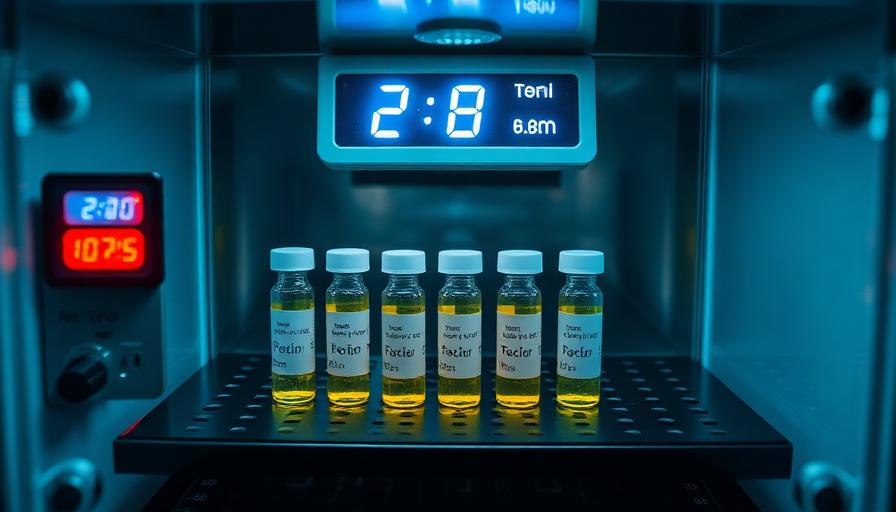
  • Temperature: 2-8°C (refrigerated)

  • Buffer: Appropriate for peptide

  • Concentration: Avoid very dilute solutions

Long-term storage:

  • Temperature: -20°C or -80°C

  • Aliquot to avoid freeze-thaw cycles

  • Use appropriate cryoprotectants if needed

Formulation Considerations

Buffer Selection

pH optimization:

  • Most peptides stable at pH 4-6

  • Avoid extremes (<3 or >9)

  • Consider peptide pI

Buffer type:

  • Phosphate: Good general choice

  • Acetate: Good for acidic pH

  • Tris: Temperature-dependent pH

Stabilizing Additives

Antioxidants:

  • EDTA: Chelates metal ions

  • Methionine: Sacrificial antioxidant

  • Ascorbic acid: Reducing agent

Surfactants:

  • Tween 20/80: Prevents adsorption

  • Poloxamer: Alternative surfactant

  • Use at low concentrations

Cryoprotectants:

  • Trehalose: Excellent lyoprotectant

  • Sucrose: Common alternative

  • Glycerol: For frozen solutions

Need Your Peptides Tested?

ACS Peptide Testing Labs provides fast, accurate HPLC purity testing, mass spectrometry identity confirmation, and comprehensive Certificate of Analysis.

Stability Testing

Types of Stability Studies

Accelerated Stability

  • Elevated temperature (40°C/75% RH)

  • Predicts long-term stability

  • Identifies degradation pathways

Real-Time Stability

  • Recommended storage conditions

  • Establishes actual shelf life

  • Required for regulatory submissions

Stress Testing

  • Extreme conditions (heat, light, pH, oxidation)

  • Forces degradation for method development

  • Identifies stability-indicating methods

Stability-Indicating Methods

Methods must be able to:

  • Detect degradation products

  • Quantify parent compound accurately

  • Separate related substances

Typical methods:

  • RP-HPLC with UV detection

  • LC-MS for identification

  • SEC for aggregates

Best Practices

Receiving and Storage

  1. Inspect packaging on receipt
  2. Store immediately at proper temperature
  3. Record lot number and expiry date
  4. Rotate stock (first in, first out)

Reconstitution

  1. Allow vial to reach room temperature
  2. Add appropriate solvent carefully
  3. Mix gently (avoid foaming)
  4. Verify complete dissolution
  5. Filter if needed (appropriate membrane)

Aliquoting

  1. Calculate needed volumes
  2. Use appropriate containers
  3. Work quickly at room temperature
  4. Label clearly with date and concentration
  5. Freeze promptly

Handling Solutions

  1. Minimize time at room temperature
  2. Avoid repeated freeze-thaw cycles
  3. Keep protected from light
  4. Use promptly after reconstitution

Troubleshooting Stability Issues

Loss of Activity

Possible causes:

  • Chemical degradation

  • Aggregation

  • Adsorption to surfaces

Solutions:

  • Test fresh aliquots

  • Change formulation

  • Use low-binding containers

Precipitation

Possible causes:

  • Exceeding solubility

  • pH change

  • Temperature change

Solutions:

  • Reduce concentration

  • Adjust pH

  • Add co-solvent if compatible

Color Change

Possible causes:

  • Oxidation

  • Maillard reaction (if sugars present)

  • Metal contamination

Solutions:

  • Add antioxidants

  • Use inert atmosphere

  • Verify reagent quality

Conclusion

Proper storage and handling are essential for maintaining peptide quality. Understanding degradation mechanisms enables appropriate preventive measures and troubleshooting when issues arise.

Related Resources

Frequently Asked Questions

Ready to Verify Your Peptide Quality?

Get professional testing from a US-based laboratory. HPLC purity, mass spectrometry identity, contaminant screening with fast turnaround and comprehensive documentation.