Last reviewed
Introduction
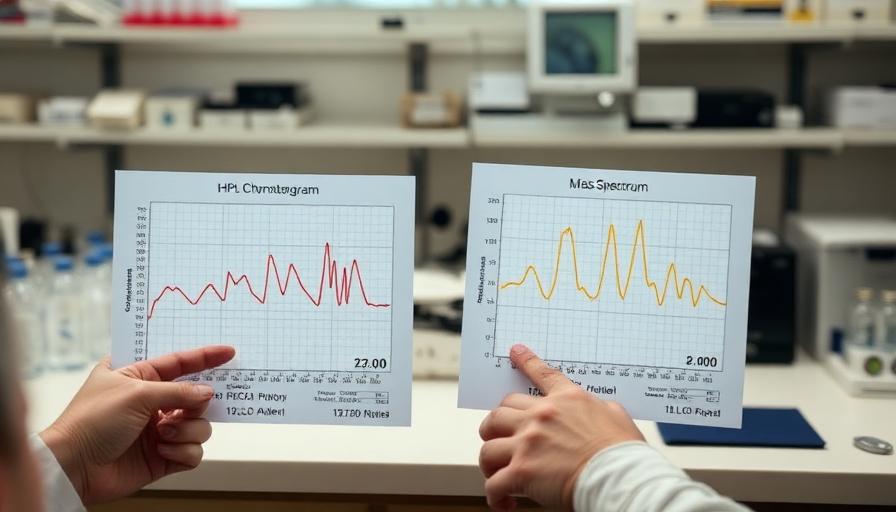
HPLC and mass spectrometry are complementary techniques for peptide analysis. Understanding their strengths and limitations helps researchers select the right approach for their specific needs.
HPLC: Strengths and Applications
What HPLC Does Best
Quantitative Purity Analysis
- Precise measurement of main component
- Detection of all UV-absorbing impurities
- Well-established quantitation methods
Separation of Related Substances
- Resolves isomers and closely related compounds
- Baseline separation enables accurate quantitation
- Preparative purification possible
Routine Quality Control
- Reproducible results
- Cost-effective operation
- Regulatory acceptance
Limitations of HPLC
- Cannot provide molecular weight information
- Similar compounds may co-elute
- Limited structural information
- Requires UV-absorbing compounds (or alternative detection)
When to Choose HPLC
- Routine purity testing
- Batch release testing
- Stability studies (with validated methods)
- When quantitative purity is primary concern
Mass Spectrometry: Strengths and Applications
What MS Does Best
Identity Confirmation
- Exact molecular weight determination
- Unambiguous identification
- Detection of modifications
Structural Information
- Sequence confirmation (MS/MS)
- Modification site localization
- Disulfide bond mapping
Impurity Identification
- Characterize unknown impurities
- Determine degradation pathways
- Support root cause investigations
Limitations of Mass Spectrometry
- Less quantitative than HPLC (generally)
- More complex operation
- Higher instrument costs
- Response varies with compound structure
When to Choose MS
- Initial identity confirmation
- Investigating unknown impurities
- Sequence verification
- Characterization of modifications
Comparing the Techniques
| Feature | HPLC | MS |
|---|---|---|
| Primary use | Quantitation | Identification |
| Cost | Lower | Higher |
| Complexity | Moderate | Higher |
| Information | Purity % | Molecular weight, structure |
| Throughput | High | Moderate |
| Regulatory acceptance | Excellent | Excellent |
LC-MS: The Best of Both Worlds
Combined Capabilities
LC-MS couples HPLC separation with MS detection:
- Separation of complex mixtures
- Real-time mass confirmation
- Impurity identification during purity analysis
LC-MS Applications
Routine Analysis:
- Purity with identity confirmation
- Rapid method development
- Batch comparison
Advanced Characterization:
- Comprehensive impurity profiling
- Stability-indicating analysis
- Process development support
LC-MS Considerations
Advantages:
- Maximum information per analysis
- Efficient use of sample
- Supports multiple objectives
Challenges:
- Higher instrument cost
- More complex method development
- Mobile phase compatibility requirements
Practical Decision Framework
Step 1: Define Your Question
- "How pure is my peptide?" → HPLC
- "Is this the right peptide?" → MS
- "What is this impurity?" → LC-MS
- "Both purity and identity?" → LC-MS
Step 2: Consider Resources
Budget:
- HPLC: Lower instrument and operational costs
- MS: Higher investment but more versatile
Expertise:
- HPLC: Widely accessible skillset
- MS: Requires specialized training
Step 3: Regulatory Requirements
QC Release:
- Often HPLC for purity
- MS for identity (or specific HPLC conditions)
Characterization:
- MS essential for full characterization
- Supports regulatory submissions