Peptide Testing Near Me: What B2B Buyers Actually Need
Bottom line: Most local analytical laboratories do not have validated methods for peptide-specific testing. Searching for "peptide testing near me" often leads to general-purpose labs that lack the HPLC columns, mass spectrometry protocols, and reference standards needed for accurate peptide characterization. Specialized mail-in peptide testing labs like ACS deliver faster turnaround, lower per-sample costs, and more reliable results, regardless of your location.
Why "Near Me" Is the Wrong Filter for Peptide Testing
When research labs, compounding pharmacies, and biotech companies search for peptide testing near me, they're optimizing for proximity instead of capability. Here's what our data shows:
| Factor | Local General Lab | Specialized Peptide Lab (Mail-In) |
|---|---|---|
| Peptide-validated HPLC methods | Rarely | Yes, optimized per peptide |
| Mass spectrometry identity confirmation | Sometimes | Standard on every sample |
| GLP-1 peptide expertise | Unlikely | Validated methods for 15+ sequences |
| Turnaround time | 7-14 days | 9-11 business days |
| Cost per sample | $400-800+ | $150-400 |
| COA comparison capability | No | Yes, side-by-side supplier verification |
How Mail-In Peptide Testing Works
Sending peptide samples to a specialized lab is straightforward and fast. The entire process typically takes less than a week from shipment to results:
Step 1: Request a Quote
Submit your testing requirements through our website. Specify the peptide(s), quantity of samples, and tests needed (purity, identity, contaminants). You'll receive a quote within 24 hours.
Step 2: Ship Your Sample
- Sample size: 100-500 ug per test
- Packaging: Sealed, labeled container (we provide shipping instructions)
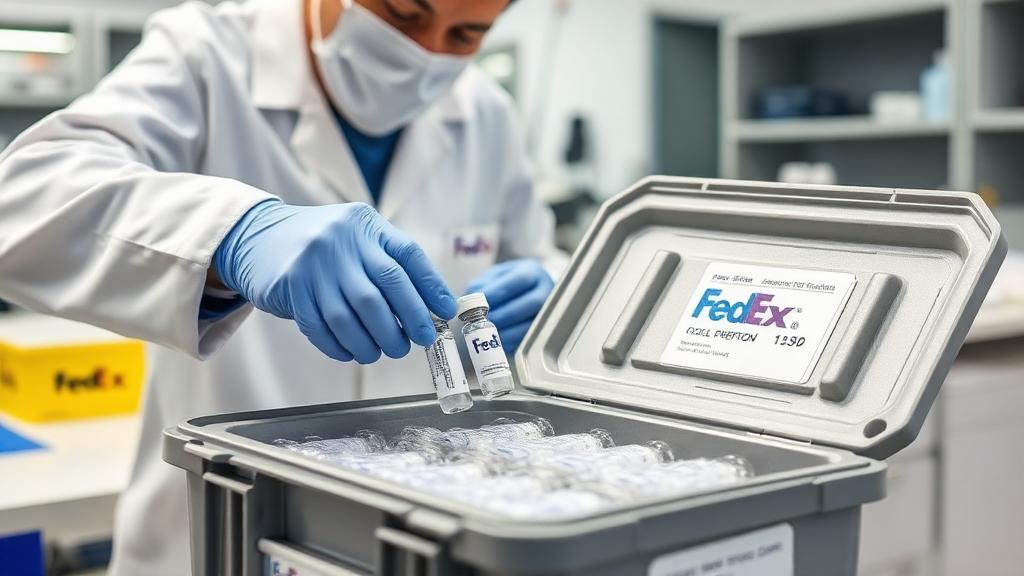
- Shipping: Overnight courier with ice packs for temperature-sensitive peptides
- Cost: Shipping is typically $25-50 via FedEx or UPS overnight
Step 3: Receive Results
Results are delivered electronically as a comprehensive Certificate of Analysis including:
- Purity percentage with HPLC chromatograms
- Molecular weight confirmation (if mass spectrometry ordered)
- Impurity profiles and degradation assessment
- Pass/fail comparison against supplier COA (if provided)
Who Should Use Mail-In Peptide Testing?
Research Universities
Academic labs in every state ship samples to ACS. There is no peptide testing lab in most university towns, and even when a campus core facility offers HPLC, they rarely have peptide-validated methods. See our location pages for state-specific guidance.
Compounding Pharmacies
503B outsourcing facilities need per-lot identity and purity testing for incoming peptide APIs. Mail-in testing is the standard approach. FDA does not require an on-site lab, only that testing is performed by a qualified laboratory.
Biotech Startups
Early-stage companies rarely have in-house analytical capabilities. Mail-in testing provides pharma-grade data for regulatory submissions without the capital expense of building an analytical lab.
Peptide Distributors
Distributors and resellers use bulk testing programs to verify supplier quality before inventory hits their shelves. Volume discounts make per-sample costs highly competitive.
The Specialized Lab Advantage
Peptide-Specific HPLC Methods
Generic HPLC methods used by local labs often fail on peptides because:
- Wrong column chemistry. Peptides require C18 or C4 reverse-phase columns optimized for their hydrophobicity
- Incorrect gradient. Peptide separations need tailored acetonitrile/water gradients with TFA ion pairing
- No reference standard. Without a validated reference, purity results are unreliable
ACS maintains validated methods for 15+ specific peptide sequences, including all major GLP-1 peptides.
Mass Spectrometry Expertise
Molecular weight confirmation requires more than just having a mass spec instrument. Peptide mass spectrometry needs:
- Optimized ESI source parameters for peptide molecular weight range
- Deconvolution algorithms for multiply-charged species
- Experience interpreting adducts, dimers, and fragmentation patterns
Local labs without regular peptide MS experience frequently misinterpret spectra or report incorrect molecular weights.
COA Comparison Capability
When you need to verify whether a supplier's Certificate of Analysis is accurate, you need a lab that routinely performs blinded third-party verification. This requires:
- Documented chain-of-custody procedures
- Blinded analysis (testing without reference to supplier claims)
- Side-by-side report comparing lab results to supplier COA
- Statistical assessment of whether discrepancies are significant